Nadene Goldfoot
Before Abraham was born, his father, Terah, had been in the traveling crowd of the Ivrim from the East who had settled in Ur, now a part of Iraq. Coming from the East, they must have come from the area of the Tigris and Euphrates Rivers. Who were these people? We call them Hebrews today. They spoke Hebrew. Were they from Babylonia, also called the land of Shinar or of the Kasdim (Chaldees)? It was looked upon as the cradle of humanity and the scene of man's first revolt against G-d with the Tower of Babel. Many biblical stories have a parallel in Babylonian literature such as the FLOOD. Abraham was born in UR, a symbol of pagan tyranny, city of idols, made by Terah, Abraham's father.
In Genesis 14: 13, Abram was called Abram, the Ivri, spelled from right to left with an ayan, vet, and raishעִברִי, meaning-the other side. Literally, the rabbis say this means the other side of the Euphrates River. The name also means that he was a descendant of Eber. Only Abraham's descendants are called "Ivrim" for they alone spoke Hebrew, which was Eber's language. His other descendants spoke Aramaic, and are called Arameans. Abram was one who lived in the plains of Mamre, the Amorite, the brother of Eshcol and the brother of Aner who were Abram's allies. HEBREW written in Hebrew looks like this: עִברִית. The letters, reading from right to left, are: ayin, vet, raish and to make it plural, a yud and a tuv. The first letters spell out Ivri.

The Tel el Amarna tablets is an Arabic name of the site of the capital of Pharaoh Amenhotep IV of Middle Egypt. In 1887, many cuneiform tablets were discovered there including letters from kings in Asia Minor from the archives of Amenhotep III of 1413-1377 BCE and Amenhotep IV of 1377-1361 BCE. Other letters were found later. Of special interest were several scores of letters from vassal kings in Canaan like the kings of Ascalon (Ashkelon) , Acre, Jerusalem, Megiddo, Sidon, Gebal, etc. These complain of the disorder happening in the country following the invasion of the HABIRU. We believe this referred to the Hebrews. The disorder was the frequent wars among Pharaoh's vassal kings, and the letters requested Egyptian assistance.

Almost all the letters were written in Akkadian. A few lines were written in Hurrian and Hittite, and some have words in Canannite. It figures correctly that Joshua had arrived.

Akkadian was a Semitic language, formerly known as Assyrian owing to the prevalence of Akkadian inscriptions in the cuneiform script found in Asssyria. Akkadians were the first people to use it in writing. It was a spoken langue from the 4th millennium BCE and served as the language of diplomacy and commerce throughout the Middle East until the Greek conquest. It resembles Hebrew and Aramaic in structure, phonology and vocabulary but is different from them in the verb formations, in the use of tenses, syntax and in the fact that its gutturals lost their distinctive character.
His people were called Habiru for a reason.
"Habiru or Apiru (Egyptian: ˁpr.w) was the name given by various Sumerian, Egyptian, Akkadian, Hittite, Mitanni, and Ugaritic sources (dated, roughly, between 1800 BC and 1100 BC) to a group of people living as nomadic invaders in areas of the Fertile Crescent from Northeastern Mesopotamia and Iran to the borders of ... Egypt in Canaan. This sounds more like the Assyrian areas.
Habiru was the name used for mercenaries or slaves, and was used in the Tel el-Amarna tables and in other documents of the 15th and 14th centuries BCE. Many scholars are emphatic that Habiru is identical with Ivri (Hebrews) and some believe that the reference in the Tel el-Amarna tablets to the threat of the habiru to Canaanite cities alludes to one of the stages in the Israelite conquest of Canaan. So we have a difference of dates here. Abram lived in the 2nd millennium BCE or 2000 BCE and Joshua and the slaves from Egypt lived later and arrived in Canaan in about 1271 BCE, about 800 years difference, but both were referring to these Hebrew speakers, descendants of the first group. How history repeats!
"Hebrew, along with Moabite and Phoenician, belong to the Canaanite branch of Semitic languages. Hebrew was spoken in Canaan before Joshua ever arrived with the 650,000 slaves from Egypt. The Tel el Amarna Letters prove that Hebrew was spoken in Eretz Yisrael before the Israelite conquest. Pre-exilic biblical Hebrew was a standardized literary language with distinct idioms for prose and poetry, full-sounding, rich in vocabulary and rhetorical devices. It borrowed many words from surrounding languages".
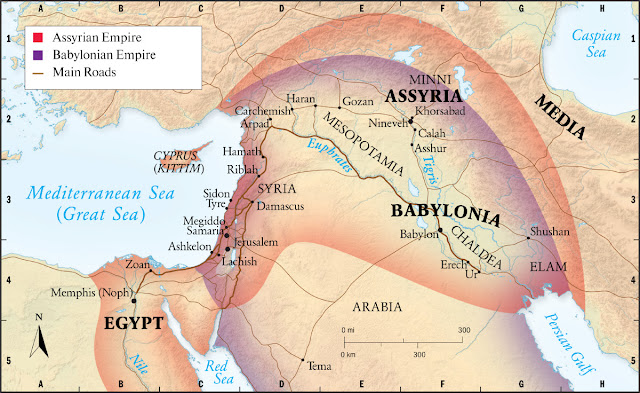
Elam was an ancient state of Babylonia, where the modern state of Khuzistan is today. It's on the map above. It was on part of the SW Iranian plateau and included the river valley around Susa and the highlands beyond. Elamite is an unknown language but Elam might have meant "THE LORD-COUNTRY.' In Mesopotamian it would be translated as "THE HEIGHTS." In Akkadian etymology, it would be related to elu, meaning "HIGH." Today, it's part of Iran since Susa is the Shushan of the Book of Esther, and the capital of Iran, and Iran not too long ago was called Persia, its ancient name. Persians are not Arabs. They are a different people. It's hard to tell what kinds of people were in Elan since populations change frequently depending on who a country is making war with and taking prisoners. Persians or Iranians as they are now called, are not Semites or even Arabs.
 Elam was connected closely with Mesopotamia for this is where they got their raw materials of wood, stone and metals. It served as a route for getting precious metals and stones like lapis lazuli, the blue stone prized by the Mesopotamians which were brought from Afghanistan. Elamites raided the valleys of the Diyala and the Tigris. Elam ruled Sumer for a time. The kings of the 3rd dynasty of Ur in Mesopotamia annexed Elam, and Susa became a seat of Sumerian governors. Could it be that Ur was bringing back Elamites to live with them? We know that Terah was an idol maker and that Abraham knew all along as a child that they were not gods but just statues made of clay by his father.
Being non-Semitic, the Elamites are classed by the Bible as children of Shem (Gen. 10:22). Was Terah an Elamite? I know that according to DNA, my father's DNA haplogroup of Q1b1a or Q-L245 came from Ur, Iraq most likely 2,000 years ago, This branch makes up only 5% of the Jewish population today. Other places they could have come from were Turkey, Iran, Iraq, and possibly southern Saudi Arabia. Iraq is the location of Ur, where Abraham and Sarah came from. They left, seeking their own land that would become free of idol worship with Abraham's leadership.
About half of present day Jews find they are haplogroup J1 and J2, which is called the Cohen gene, and many are Cohens in the synagogue. This is the largest Jewish haplogroup, and we know it came from Moses and Aaron. Other haplogroups such as E, I and R are found.
A very long time ago at the beginning of the 19th century BCE just after Abraham was born, there was an independent Elamite royal dynasty who reigned in Anshan in the uplands and Susa on the plain. Elam had a lot of influence that covered a wide area, and had trading expeditions where they carried raw materials from their lands of Elam as far as Hazor in Canaan. By the middle of the 18th century BCE, Elam was consolidated under the rule of Kutir-Nahhunte I, whose reign was during the same period of Hammurabi of Babylon and with his son, Samsu-iluna. From about this time on and thoughout the whole period, Babylonian influence is noticed by the use of Akkadian as the written language of economic and cultural life. Hammerabi (1728-1686 BCE) had laws similar to our 10 Commandments. It's penalties for breaking his legal code was more severe than in the 10 Commandments and its political nature is based on custom and obedience to the king's will instead of being like the 10 Commandments which depends on its appeal to the human conscience. Both seem to have arisen in the Mesopotamian culture with the 10 Commandments coming from G-d, given to the people by Moses.
What is a Semite? Are Jews Semites being Elamites were not? "The term Semitic people or semitic cultures (from the biblical "Shem",Hebrew: שם), was a historical term for the people or cultures who speak or spoke the Semitic languages. " a member of any of the peoples who speak or spoke a Semitic language, including in particular the Jews and Arabs with Semitic languages of: Arabic, Hebrew (Tiberian), Syriac, Ge'ez, and Akkadian.."The racial or ethnic use of the term, together with the parallel terms Hamitic and Japhetic, is now obsolete. The term also came to describe the extended Semitic religions and ethnicities, as well as the history of these varied cultures as associated by close geographic and linguistic distribution. Was it that Abraham was an Elamite?
Abraham's people came from Shem, one of the 3 sons of Noah. From him came the nations of Elam, Asshur, Arpachshad and Aram. Arpachshad was the father of Eber and ancestor of Abraham. People that speak language akin to Hebrew are called Semitic people and their languages are Semitic languages. According to the experts, we did not come from Elam, then. Eber is not shown on the map because a whole group of Semitic people and tribes came out of him which included the Israelites who are therefore, according to the general opinion, called the Hebrews. The title of the Israelites comes from Jacob, grandson of Abraham who had a name change to Israel due to something that happened to him when he was traveling home. He had been gone from his father's house for 20 years and was returning with property he had accumulated. He struggled as if wrestling with a heavenly emissary, angel, and overcame this angel, then being given the name Israel. It was a name of accomplishment, overcoming a struggle-in his heart or mind. He's buried in the Cave at Hebron.
Descendants of Shem
1 Shem
. 2 Elam
. 2 Asshur
. 2 Arpachshad b: in 2 years after flood
..... 3 Shelah
......... 4 Eber
............. 5 Peleg-Abraham
................. 6 Reu
..................... 7 Serug
........................... +Milcah
......................... 8 Nahor I
............................... +Iyoska
............................ 9 Terah b: in Ur of Chaldees, Sumeria, Mesopotamia Iraq
................................ 10 [1] Abram-Abraham
...................................... +Sarai-Sarah
................................ *2nd Wife of [1] Abram-Abraham:
...................................... +Hagar
................................ *3rd Wife of [1] Abram-Abraham:
...................................... +Keturah
Resource: https://www.jewishvirtuallibrary.org/jsource/judaica/ejud_0002_0006_0_05716.html
http://jewishfactsfromportland.blogspot.com/2010/01/jewish-genes-what-haplogroup-could-they.html
The New Standard Jewish encyclopedia
https://en.wikipedia.org/wiki/Semitic_people
http://www.jewishvirtuallibrary.org/jsource/History/hebrews.html
https://en.wikipedia.org/wiki/Habiru

Before Abraham was born, his father, Terah, had been in the traveling crowd of the Ivrim from the East who had settled in Ur, now a part of Iraq. Coming from the East, they must have come from the area of the Tigris and Euphrates Rivers. Who were these people? We call them Hebrews today. They spoke Hebrew. Were they from Babylonia, also called the land of Shinar or of the Kasdim (Chaldees)? It was looked upon as the cradle of humanity and the scene of man's first revolt against G-d with the Tower of Babel. Many biblical stories have a parallel in Babylonian literature such as the FLOOD. Abraham was born in UR, a symbol of pagan tyranny, city of idols, made by Terah, Abraham's father.
 |
| Terah, Abram's father |

The Tel el Amarna tablets is an Arabic name of the site of the capital of Pharaoh Amenhotep IV of Middle Egypt. In 1887, many cuneiform tablets were discovered there including letters from kings in Asia Minor from the archives of Amenhotep III of 1413-1377 BCE and Amenhotep IV of 1377-1361 BCE. Other letters were found later. Of special interest were several scores of letters from vassal kings in Canaan like the kings of Ascalon (Ashkelon) , Acre, Jerusalem, Megiddo, Sidon, Gebal, etc. These complain of the disorder happening in the country following the invasion of the HABIRU. We believe this referred to the Hebrews. The disorder was the frequent wars among Pharaoh's vassal kings, and the letters requested Egyptian assistance.

Almost all the letters were written in Akkadian. A few lines were written in Hurrian and Hittite, and some have words in Canannite. It figures correctly that Joshua had arrived.

Akkadian was a Semitic language, formerly known as Assyrian owing to the prevalence of Akkadian inscriptions in the cuneiform script found in Asssyria. Akkadians were the first people to use it in writing. It was a spoken langue from the 4th millennium BCE and served as the language of diplomacy and commerce throughout the Middle East until the Greek conquest. It resembles Hebrew and Aramaic in structure, phonology and vocabulary but is different from them in the verb formations, in the use of tenses, syntax and in the fact that its gutturals lost their distinctive character.
His people were called Habiru for a reason.
"Habiru or Apiru (Egyptian: ˁpr.w) was the name given by various Sumerian, Egyptian, Akkadian, Hittite, Mitanni, and Ugaritic sources (dated, roughly, between 1800 BC and 1100 BC) to a group of people living as nomadic invaders in areas of the Fertile Crescent from Northeastern Mesopotamia and Iran to the borders of ... Egypt in Canaan. This sounds more like the Assyrian areas.
 |
| Egyptian mural of slaves making bricks for building in c1700 BCE-1300 BCE |
 |
| Much later Assyrians leading away the 10 tribes as slaves in 722 and 721 BCE back to Assyria again. |
"Hebrew, along with Moabite and Phoenician, belong to the Canaanite branch of Semitic languages. Hebrew was spoken in Canaan before Joshua ever arrived with the 650,000 slaves from Egypt. The Tel el Amarna Letters prove that Hebrew was spoken in Eretz Yisrael before the Israelite conquest. Pre-exilic biblical Hebrew was a standardized literary language with distinct idioms for prose and poetry, full-sounding, rich in vocabulary and rhetorical devices. It borrowed many words from surrounding languages".
Elam was an ancient state of Babylonia, where the modern state of Khuzistan is today. It's on the map above. It was on part of the SW Iranian plateau and included the river valley around Susa and the highlands beyond. Elamite is an unknown language but Elam might have meant "THE LORD-COUNTRY.' In Mesopotamian it would be translated as "THE HEIGHTS." In Akkadian etymology, it would be related to elu, meaning "HIGH." Today, it's part of Iran since Susa is the Shushan of the Book of Esther, and the capital of Iran, and Iran not too long ago was called Persia, its ancient name. Persians are not Arabs. They are a different people. It's hard to tell what kinds of people were in Elan since populations change frequently depending on who a country is making war with and taking prisoners. Persians or Iranians as they are now called, are not Semites or even Arabs.

Being non-Semitic, the Elamites are classed by the Bible as children of Shem (Gen. 10:22). Was Terah an Elamite? I know that according to DNA, my father's DNA haplogroup of Q1b1a or Q-L245 came from Ur, Iraq most likely 2,000 years ago, This branch makes up only 5% of the Jewish population today. Other places they could have come from were Turkey, Iran, Iraq, and possibly southern Saudi Arabia. Iraq is the location of Ur, where Abraham and Sarah came from. They left, seeking their own land that would become free of idol worship with Abraham's leadership.
About half of present day Jews find they are haplogroup J1 and J2, which is called the Cohen gene, and many are Cohens in the synagogue. This is the largest Jewish haplogroup, and we know it came from Moses and Aaron. Other haplogroups such as E, I and R are found.
A very long time ago at the beginning of the 19th century BCE just after Abraham was born, there was an independent Elamite royal dynasty who reigned in Anshan in the uplands and Susa on the plain. Elam had a lot of influence that covered a wide area, and had trading expeditions where they carried raw materials from their lands of Elam as far as Hazor in Canaan. By the middle of the 18th century BCE, Elam was consolidated under the rule of Kutir-Nahhunte I, whose reign was during the same period of Hammurabi of Babylon and with his son, Samsu-iluna. From about this time on and thoughout the whole period, Babylonian influence is noticed by the use of Akkadian as the written language of economic and cultural life. Hammerabi (1728-1686 BCE) had laws similar to our 10 Commandments. It's penalties for breaking his legal code was more severe than in the 10 Commandments and its political nature is based on custom and obedience to the king's will instead of being like the 10 Commandments which depends on its appeal to the human conscience. Both seem to have arisen in the Mesopotamian culture with the 10 Commandments coming from G-d, given to the people by Moses.
 |
| Twins, Esau and Jacob, with Esau leaving their father, Isaac to join the Arabs. Both are usually called Semites. |
 |
| Abram, later called Abraham |
Abraham's people came from Shem, one of the 3 sons of Noah. From him came the nations of Elam, Asshur, Arpachshad and Aram. Arpachshad was the father of Eber and ancestor of Abraham. People that speak language akin to Hebrew are called Semitic people and their languages are Semitic languages. According to the experts, we did not come from Elam, then. Eber is not shown on the map because a whole group of Semitic people and tribes came out of him which included the Israelites who are therefore, according to the general opinion, called the Hebrews. The title of the Israelites comes from Jacob, grandson of Abraham who had a name change to Israel due to something that happened to him when he was traveling home. He had been gone from his father's house for 20 years and was returning with property he had accumulated. He struggled as if wrestling with a heavenly emissary, angel, and overcame this angel, then being given the name Israel. It was a name of accomplishment, overcoming a struggle-in his heart or mind. He's buried in the Cave at Hebron.
Descendants of Shem
1 Shem
. 2 Elam
. 2 Asshur
. 2 Arpachshad b: in 2 years after flood
..... 3 Shelah
......... 4 Eber
............. 5 Peleg-Abraham
................. 6 Reu
..................... 7 Serug
........................... +Milcah
......................... 8 Nahor I
............................... +Iyoska
............................ 9 Terah b: in Ur of Chaldees, Sumeria, Mesopotamia Iraq
................................ 10 [1] Abram-Abraham
...................................... +Sarai-Sarah
................................ *2nd Wife of [1] Abram-Abraham:
...................................... +Hagar
................................ *3rd Wife of [1] Abram-Abraham:
...................................... +Keturah
Resource: https://www.jewishvirtuallibrary.org/jsource/judaica/ejud_0002_0006_0_05716.html
http://jewishfactsfromportland.blogspot.com/2010/01/jewish-genes-what-haplogroup-could-they.html
The New Standard Jewish encyclopedia
https://en.wikipedia.org/wiki/Semitic_people
http://www.jewishvirtuallibrary.org/jsource/History/hebrews.html
https://en.wikipedia.org/wiki/Habiru


