Is war a bad thing?
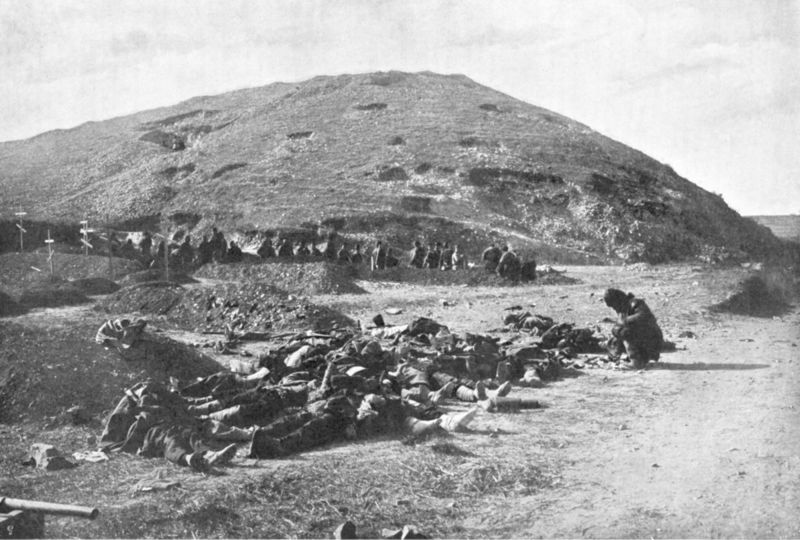
On the surface, and fundamentally speaking, the answer to this question is an absolute and unequivocal YES! Simply stated, war is hell. It wreaks utter destruction upon virtually everything it touches, including, most prominently, human life itself. In a perfect world, war would not exist, and that is as it should be.
Unfortunately, we do
not live in a perfect world. War has therefore been a part of the human experience throughout the history of
this world.
Despite the awful realities of war--especially upon the individual--many benefits are often derived from the perpetual onslaught of humanity's worst state of collective being. Indeed, there are always two sides to every event in human history.
Please don't misunderstand: Such benefits should NEVER be the impetus for going to war. It is worthwhile, however, to recognize
when and identify
how positive developments can arise from negative, even fatal, events in life -- including war. By so doing, we can better make sense of disasters that arise, as well as better prepare for or prevent future calamities from occurring.
The specific purposes of this essay are threefold:
FIRST, to better educate readers on the holistic nature of war by illuminating benefits and ironies concomitant to the calamities of war.
SECOND, to call out the
very real existence of evil in this world -- always the true author of war.
THIRD, to make a case for the likelihood of a pending conflict in coming years on par with previous world wars and to communicate how we can best prepare for coming conflicts.
Let's begin by discussing the calamity, as well as some of the benefits and ironies of war.
From War Cometh Calamity: War kills all living beings in its way and destroys all non-living things in its path.
If you'd like to brush up on the sheer statistical menaces brought on by war, author Chris Hedges' "
What Every Person Should Know About War" (2003,
Free Press) is a fine source to consult. To read an excerpt from his book, published in the New York Times on July 6, 2003, click
HERE.
Just a few statistics that Hedges' shares in his book include the following:
* Over the course of the past 3,400 years, only 268 of them (8%) have been marked by world peace.
* Over 100 million people were killed by war in the 20th Century alone.
* Perhaps as many as 1 billion people have been killed in war throughout human history.
* World War II cost Americans 3 trillion dollars to fight (an average of $20,388 per person).
Source: Hedges, C. (2003). What Every Person Should Know About War (First Chapter). The New York Times. Published on July 6, 2003. URL: http://www.nytimes.com/2003/07/06/books/chapters/0713-1st-hedges.html?pagewanted=allAfter reviewing such gruesome statistics, the notion that any real benefits result from war seem to belie all credulity. But the fact remains that many positive things are spurred on by the onset and carrying out of war.
Benefit #1: War, especially big wars, lead to enormous progress in the fields of science, technology, medicine, etc.
There are many reasons why humankind made such unprecedented progress in the 20th century in the fields of science, technology, medicine, etc., but two of the most prominent reasons are World War I and World War II.
History suggests that few (if any) things engage the creative capacity or work ethic of a populace more than one of two things: 1) Bloodlust and the appetite for conquest by an invader, or 2) The mechanisms of self-preservation and patriotism that impel one to defend one's home, family, and nation from an invader.
Benefit #2: War can be a powerful antidote to economic depression.
While I would
NEVER encourage or suggest anyone go to war to for the sake of economic gain, let's face the facts: World War II did more to bring the United States out of the Great Depression and put our nation on the road to unprecedented prosperity than the Roosevelt Administration and his New Deal did, or could have ever dreamed of doing. The call to war was, quite simply, a call to work for millions of Americans who had been out of work for months or even years.
Benefit #3: War Breeds Anathema for Itself
World War I was famously dubbed "The War to End All Wars" for one simple reason: It was assumed by many that the most hellish single conflict in human history had sufficiently blotted out all future bloodlust from the human race.
I am currently watching one of the most fascinating documentaries I've ever viewed (and I've seen a few). It is about World War I, and is called
14 -- Diaries of the Great War.
No previous war can fully compete with the hellish horrors of this colossal conflict. A modern war fought with old-fashioned paradigms and tactics proved an inimitable recipe for unprecedented butchery and wide-scale atrocities.
It is not surprising, then, that most of its participants desired to
never return to a state of individual or collective being as horrendous as that experienced by tens of millions of soldiers and civilians between August 1914 and November 1918.
It is also not surprising that many years and/or decades often pass by between one war and the next for most nations. Sadly, it is often this very hesitancy which inhibits a nation from taking the difficult and disciplined measures required to prevent future wars through proper preparation. And thus we have our first great irony of war...
Irony #1: The greatest war irony in human history is found in the tragic fact that the inexplicably terrible conflict of World War I planted and effectively fertilized all the right seeds for a second, even greater conflict less than two generations later. Indeed, historical hindsight has verified time-and-again that the so-called
"War to End All Wars" and the troubled treaties that "ended it" actually did the exact opposite, leading directly to the rise of the fiends who would perpetrate World War II -- and the laziness, cowardice, and fear that would handcuff those nations who could have potentially prevented it during the 1920s and 30s.
Irony #2: Bad Guys fight and survive on the Right Side of every conflict, and Good Guys fight and die on the Wrong Side of every war.
The more I study the history of warfare, the more I discover the reality that there are honorable, virtuous troops and dishonest, debauched soldiers in the trenches on both sides of just about any conflict, regardless how "right/good" or "wrong/evil" one's commanding officers and civil leaders may be.
And tragically, good guys on the bad side are sometimes killed while bad guys on the good side sometimes live. On the other hand, some bad guys on both sides seem to meet their just fate while some good guys on both sides seem to be miraculously preserved. To some, such occurrences appear utterly arbitrary. Others are convinced that good luck, Karma, or even God is involved in a selection process devoid of caprice. To illustrate, consider the following three examples.
U.S. Grant vs. Stonewall Jackson
Ulysses S. Grant is widely considered to be one of the greatest Generals in U.S. history. Before Grant took charge, Lincoln's
Army of the Potomac had been embarrassed for three straight years by a superior-led Confederate force one-third its overall size and strength. After Grant took charge, the Union was finally able to mobilize its superior numbers and resources into a winning strategy. Before this remarkable military success, Grant was a drunkard who failed at nearly everything he ever tried. Horsemanship, mathematics, and soldiering were a few exceptions. Despite his character issues and history of failure, Grant's overriding military successes propelled him into the White House -- a post he was poorly prepared or dispositioned to effectively hold. Indeed, his scandal laden Presidency emblazoned for him an ignominious legacy that consistently positions him among our nation's top-five WORST Commanders-in-Chief.
Thomas J. "Stonewall" Jackson was one of the South's top Generals. He was killed midway through the Civil War on May 10, 1863 due to complications following an incident of "Friendly Fire"during the period of the Chancellorsville Campaign. Jackson passed away less than two months before the
Battle of Gettysburg, which would prove to be a turning point in the war for the North. Upon hearing of his death, General Robert E. Lee remarked, "I have lost my right arm ... [and am] bleeding at the heart."
Source: Hall, K.E. (2005). Stonewall Jackson and Religious Faith in Military Command. McFarland & Company: Jefferson, NC. Page 184 (as written in the autobiography of the Reverend William Mack Lee, General Lee's wartime cook). The South enjoyed almost uninterrupted success with Jackson in the saddle. They were never the same after he was taken.
A careful study of Jackson's life both before and during the Civil War reveal a very different man than Grant. Aside from being a devout Christian, Jackson did not smoke, drink, or even play cards. Without any question, Jackson was more virtuous, refined, God-fearing/worshipping, and honest than Grant.
Endless throngs will forever praise Grant's name for leading the winning charge against
The Lost Cause -- a cause that, however you spin it, was ultimately rooted in the evils of slavery. Even I, while I don't respect much about Grant's character, admire his military leadership, and am grateful to him for successfully securing that vital Union victory.
There is no question that Jackson was fighting on the wrong side of history, but if you had to do business with, or set your daughter up with Thomas or Hiram (Ulysses), whom would you choose?
An Alabama Infantryman Inexplicably Spares Colonel Chamberlain's Life
Joshua Lawrence Chamberlain, Colonel of the 20th Maine Infantry Regiment, cemented his hero's status while defending Little Round Top and preserving the extreme left flank of the Union line during the pivotal second day of the
Battle of Gettysburg. During his and his regiment's legendary heroics that day, Chamberlain was lucky enough to live to fight another day, other battles, rise in the ranks to Brevet Major General, receive the singular honor of accepting the Confederate flag of surrender at Appomattox Courthouse two years later, serve four terms as Governor of Maine, 12 years as President of Bowdoin College, raise a family, etc. Death, brought on by lingering symptoms from wartime wounds, would not finally claim this courageous and intelligent man until 1914.
Chamberlain is, by virtually anyone's estimation, one of the finest soldiers who ever donned a uniform. His character was circumspect, his courage was undaunted, and his patriotism was unquestioned. One of my favorite stories about him tells of his attempt to sign up to fight in the Spanish American War -- at age 70! The U.S. Army's declination of his request, due to his advancing years, was an event that Chamberlain called "one of the great disappointments of my life."
Was Chamberlain merely lucky to survive his famous heroics on Little Round Top and the hellish combat he encountered throughout the rest of the war? Or was there perhaps something else at play. I reprint the following story from Chamberlain's memoir --
Bayonets Forward! My Civil War Reminiscence -- after which you can make up your own mind on the matter.
MY LIFE HANGS ON AN IMPULSE
"[During the Battle of Gettysburg], so far I had escaped. How close an escape I had had I did not know till afterwards. I think I may mention here, as a psychological incident, that some years after the war, I received a letter written in a homely but manly style by one subscribing himself "a member of the Fifteenth Alabama," in these words:
"Dear Sir: I want to tell you of a little passage in the battle of Round Top, Gettysburg, concerning you and me, which I am now glad of. Twice in that fight I had your life in my hands. I got a safe place between two rocks, and drew bead fair and square on you. You were standing in the open behind the center of your line, full exposed. I knew your rank by your uniform and your actions, and I thought it a mighty good thing to put you out of the way. I rested my gun on the rock and took steady aim. I started to pull the trigger, but some queer notion stopped me. Then I got ashamed of my weakness and went through the same motions again. I had you, perfectly certain. But that same queer something shut right down on me. I couldn't pull the trigger, and, gave it up--that is, your life. I am glad of it now, and hope you are. Yours Truly."
Source: Chamberlain, J.L. (1994). Bayonet! Forward: My Civil War Reminiscences. Stan Clark Military Books: Gettysburg, PA. Page 31.School-Boy Pedophiles Cut Down on the Western Front
Years ago, I listened to an academic history about the life of the Christian author, C.S. Lewis (1899-1963), who spent time in combat and was wounded while fighting for the British Army on the Western Front. The most memorable thing I took away from this learning experience was the following...
When Lewis was a young teenager away at boarding school, an extraordinarily sordid and licentious means of hazing was applied by some of the upperclassmen. Their abuse involved the homosexual bullying of some of the "cuter underclassmen" who were referred to by their abusers as "Tarts." In his retelling of this reprehensible memory, Lewis concluded the story by reporting that most of the perpetrators of these foul deeds were later killed by German machine gun fire at
The Battle of the Somme -- The bloodiest battle in British military history -- a battle that would eventually claim a million and a half combined casualties.
Benefit 4: War builds a generation well-prepared for future successes.
Prior to World War II, the United States was a growing world power. However, when Hitler was wreaking havoc across Poland as well as Western and Northern Europe in 1939, the U.S. Military remained relatively small, and public opinion was firmly entrenched
against the idea of becoming involved in another European-based war.
Over time, American sympathy grew for the plight facing Britain, France, Russia, and other countries under Nazi siege. These sympathies bolstered U.S. contributions of money, resources, and armaments to the Allied Powers. However, it was not until the bombing of Pearl Harbor that America became fully committed to the conflict.
What happened next was -- and still is -- an unprecedented rise of an international military superpower. In less than four years time, the United States went from having a military force of a few hundred thousand to the most powerful force the world had ever seen (and may ever see), with over
14 million men and women in uniform (10% of the population). This combined force, along with its allies, had beaten back, neutralized, and ultimately defeated two of the most powerful military forces in world history, liberating nearly a dozen countries in the process. It was an unprecedented achievement requiring the collective discipline, devotion, and dedication of an entire nation of 140 million people and her allies.
By August 1945, The United States of America was unquestionably a World Superpower. And that was just the beginning of her remarkable rise. The following two decades saw this remarkable fighting force return home and go to work, utilizing the same discipline, devotion, and dedication they had applied to the war effort to their endeavors to build a prosperous new life for themselves, their families, and their community. With this kind of moral and practical capacity in tow, "The Greatest Generation," as Tom Brokaw famously dubbed them, paved the way for an unprecedented period of prosperity during the 1950s and 1960s. In nearly every regard, America became the envy of the world and the moral leader during a time of rife suspicion and fear of nuclear holocaust with the world's other Superpower at that time--the Soviet Union.
Irony #3: The so-called "Greatest Generation" gives birth to the Baby Boom Generation
 |
Ned Adams Jensen
1918-2004 |
My paternal grandfather was a member of the "Greatest Generation." An Army radioman in the 118th Signal Radio Intelligence Company, 3rd U.S. Army, Ned Adams Jensen landed on Utah Beach during the initial Allied landings on Normandy. He served in England, France, Luxembourg, and Germany before being honorably discharged from the Army on October 22, 1945. Soon after, he returned to Monticello, Utah, where he met his first child and son (my Dad) for the first time. Born October 20, 1943, my Dad was already two years old when he first met his dad.
 |
Rex Buckley Jensen with his Dad, Ned
1945 |
As soon as my grandpa arrived home, Ned went to work in his father's grocery store. A decade later, he built his own store --
Jensen's Food Town -- which he successfully ran until selling the store and retiring in 1982. If you ask my own father the greatest single lesson he learned from his dad, he will tell you without hesitation: "He taught me how to work hard." Most of his life, beginning as a child and continuing into his later 30s before Grandpa retired, my Dad worked in, and later, largely ran,
Jensen's Food Town. It became a cornerstone of his education and development. It taught him worthwhile lessons he would successfully apply to other professional endeavors later in life.
 |
| Jensen's Food Town; Monticello, Utah. |
Despite the remarkable war and post-war contributions made by "The Greatest Generation," and despite the remarkable legacy they passed on to their children, one of the great ironies of this generation is that they gave birth to the Baby Boomers.
Why is this ironic? Because collectively speaking, the progeny of this so-called Greatest Generation chose to embrace many things widely considered anathema to their parents. From illicit drug use and open sexual permissiveness to a widespread cultural questioning of the fundamental goodness of their country, Baby Boomers were, collectively speaking, eager to rebel against the very virtues that allowed their parents' generation to achieve legendary status after defeating the greatest forces of evil the world had ever seen, and then returning home to quietly build the greatest nation the world had ever known.
In their defense, the Baby Boomers did much to build upon the successes of their forbearers and perpetuate the freedoms and prosperity of collective Americana. Their generation also produced important leaders, especially in the fields of technology and medicine (e.g., Steve Jobs, Bill Gates, Ben Carson, etc.).
Our three most recent U.S. Presidents (Clinton, Bush, & Obama), who all served two terms, are also Baby Boomers (Obama may qualify as an older Generation X-er, depending on where you slice the dates), although plenty of questions remain regarding the overall efficacy or greatness of said leaders when measured against their 42 predecessors.
In the end, and unlike their parents' generation, which is almost universally venerated, the jury remains out on whether the Baby Boom Generation has collectively helped or hurt American society (despite the millions of individual Baby Boomers who have been fine, upstanding, honest, and hard working citizens). All things considered, have the Baby-Boomer's collectively embraced mantra of "Sex, Drugs, and Rock'n'Roll" been good for America and the World? I purposely choose not to try and answer this question and instead leave it open for further discussion.
Note: My mother is a Baby Boomer. My father is also a Boomer, or a very young member of the Silent Generation (depending where you slice the dates).
The Very Real Existence of Evil
Freedom Focused holds that "Good" and "Evil" are not terms to be relegated to the figurative language of literature. They are, in fact, very real forces that operate in the minds and hearts of real human beings, including, to varying degrees, you and me. Because
real evil exists, and always will in this world under its historical and present circumstances, insidious violence and unjust warfare will always exist--period.
John Adams famously remarked that "facts are stubborn things." Postmodernists are perfidiously stubborn in their attempts to ignore the compelling fact that
real evil exists in the world. As such, they are hesitant, if not downright unwilling, to even utilize the term "Evil," since usage suggests existence, and their desire is to wish it away. They believe themselves sophisticated and smart enough to figure out the "why" behind every human event, and to a postmodernist, evil in any real sense is almost always disqualified from being a legitimate variable in forming any kind of equation regarding "why." They also believe themselves morally justified in deconstructing any evil doing on their own part, which has the benefits of opiating those inconvenient and churlish pulses of human conscience.
Click
HERE to learn more about
postmodernists and the
postmodern period.
Click
HERE to learn more about the
AGE of AUTHENTICISM that has begun to eclipse postmodernism in the twenty-first century.
This is just one of many reasons why postmodern political leaders will downplay the need for a strong, robust military. After all, war is beginning to come to an end, because progressivism is enlightening collective humanity to the point that we are becoming too enlightened, sophisticated, and mature to engage in war -- at least not on a wide scale. While history proved that the Great War was a far cry from "The War to End All Wars," postmodernists may argue that World War II sealed the deal. They will further point to the military castration and other postmodern, progressive policies of much of Europe (the paragon of so-called sophisticated populaces) as evidence to support their theory.
I am not so sure.
In fact, I believe it is very possible that a third, major, world conflict -- on par with the two world wars of the past century -- is not only highly likely to occur in our lifetimes, but may even break within the next decade.
A primary premise for my belief that such a terrible conflict is not only in our future, but in the NEAR future is the research of generational scholars
William Strauss and
Neil Howe. Famous for their scholarship on generations (past, present, and future), Strauss and Howe have conducted substantial research on what many others have already observed about the past: namely, that history is predictably cyclical such that you can, with some precision, begin to make reasonable projections about the future.
"There is a mysterious cycle in human events. To some generations much is given. Of other generations much is expected. This generation has a rendezvous with destiny."
~ Franklin Delano Roosevelt, 1936
According to their research, the Millennial Generation is cyclically positioned in the same role as the later-depression/World War II era generation. Since the cycles of history suggest that a major crisis breaks every 80 years or so, they are likely to face a national or world crisis/calamity on par with the crisis which faced "The Greatest Generation" in their youth (i.e. World War II).
When will this crisis/calamity break? No one knows exactly, but
Strauss and
Howe put it right around the year 2020, give or take a few years.
Dubbed the "Crisis of 2020" these scholars project a prolonged period of trial and suffering that may last for up to a decade, beginning as early as 2013 and ending as late as 2029. Based strictly on the historical evidence undergirding their premise for predictions, they suggest this period of turmoil will parallel the difficulties faced by Americans during The Civil War as well as the Great Depression and World War II. In their own words:
"The Crisis of 2020 will be a major turning point in American history and an adrenaline-filled moment of trial. At its climax, America will feel that the fate of posterity--for generations to come--hangs in the balance. ... This crisis will be a pivotal moment in the lifecycles of all generations alive at the time."
Thankfully,
Strauss and
Howe are optimistic about our resolve to successfully combat the trials we will face in this period of dire refinement:
"The sense of community will be omnipresent. Moral order will be unquestioned with 'rights' and 'wrongs' crisply defined and obeyed. Sacrifices will be asked, and given. America will be implacably resolved to do what needs doing, and fix what needs fixing."
Source: Strauss, W. & Howe, N. (1991). Generations: The History of America's Future, 1584-2069. Quill: New York, NY. Page 382. (p. 382).Where will the conflict come from? We don't know, and
Strauss and
Howe wisely avoid getting overly specific. However, clues are already abounding around us. First, there is ISIS and other Radical Islamic Extremist Terrorist groups that have succeeded in spreading their bone-chilling brand of terror to many corners of the Globe. Next there is the rise of Russia and China as co-sub superpowers beneath the United States -- all while NATO countries (including the U.S.) throughout the West continue along a pathway of seemingly intentional military and economic decline. If that weren't enough, there remains the perennial threat of insanity coming out of North Korea as well as the nuclear rise of Iran. While a specific "Axis of Evil" may not be congealing as clearly as it did in the 1930s, let us remember that "hindsight is 20/20," meaning historians will
always be a LOT smarter than present policy-makers.
William Strauss and
Neil Howe could be wrong. One of the most important things I have learned about studying history is this: a clear understanding of history does not make you a clairvoyant caller of the future. I personally do not claim to be a prophet, nor do I wish for untold calamities to rain down on my family, friends, neighbors, or myself. As such, in some ways, I hope that
Strauss and
Howe are wrong.
In other ways, however, I cannot help but reflect on the potential positive developments that can arise from the ashes of terrible conflicts. War is always horrendously hellish to each individual, home, community, and nation it scars. There is no wishing away that fact. Yet for some individuals, and certainly for some collective populaces, the trials by fire that come from war can also engender some of the richest relationships, the most cherished memories, and the most important personal growth and character development of their lives, thus providing the ashes from whence future growth springs forth, allowing the phoenix to rise again to achieve even greater heights in the future. Holding onto such moments of crises can even be a means of holding on period for some. In the words of M. Scott Peck:
"Community develops naturally only in response to crisis. So it is that strangers in the waiting room of an intensive care unit will rapidly come to share with each other their deepest fears and joys ... Or within hours of an earthquake ... normally self-centered wealthy adolescents will be working hand in hand with poor laborers in around-the-clock sacrificial love. ...
"The only problem is that as soon as the crisis passes, so does the community. As a result, there are millions of people who are mourning their lost crises. I can guarantee you that this Saturday night, if not this Thursday night, there will be tens of thousands of old men in VFW and American Legion clubs drinking themselves silly, mourning the days of World War II. They remember those days with such fondness because even though they were cold and wet and in danger, they experienced a depth of community and meaning in their lives that they have never quite been able to recapture since."
Source: Peck, M.S. (1993). Further Along the Road Less Traveled: The Unending Journey Toward Spiritual Growth. Simon & Schuster: New York. P. 145-146.Perhaps one of the moral prerequisites of ridding our world of war is learning to create authentic communities that successfully operate and maintain their full vitality in times of peace as well as crisis. Until then, maybe we
need, if not war, at least other menacing crises and perplexing crucibles that can spur our growth and polish and refine our capacities. I do not want to fight a war. I would much rather spend my time and effort building something than tearing it down--even if I am compelled to participate in necessary means of destruction in the pursuit of justifiable self- and national defense.
What I do know for a fact is that evil --
real evil -- exists in the world today just as certainly as it did at any other point throughout human history. As a result, war, on one level or another, will continue indefinitely into the future
until the fundamental makeup of humanity and its fatally flawed collective leadership receives a holistic moral transplantation. Unfortunately, I have no confidence that any mortal being could possibly engender such a welcomed coup.
Christian believers hold out hope for the second coming of Jesus Christ to remedy this seeming catch 22. Atheists and progressives, two terms that have become increasingly synonymous, hold out hope for the ultimate evolution of the human mind and heart into a species advanced enough to reject war moving forward. For non-believing scientists, the former option is a fairy tale. To thoughtful historians and astute scholars of the past, the latter option is a first-class ticket to fantasyland. Other camps hold other views on the subject.
Whichever camp you choose to anchor your tent, we would all be wise to heed the wisdom of Jesus (at least as philosopher), who taught that preparation is an antidote to fear. President Roosevelt claimed that the only thing we have to fear is fear itself. I'm not so sure. I think that the evil impulses inside of us all -- and the untold collateral damage resulting from yielding thereto -- are both real things we
ought to fear badly enough to motivate our waging war against them until they become extinct. We must wage this internal war continually, not only for the sake of self-preservation, but also for the sake of collective continuation, authentic community, and progress. Moreover, we should also fear external evil sufficiently to motivate prudential preparation to defend our lives, liberty, families, communities, states, nation, and world at any cost--even if that cost demands the sacrifice of our own lives.
How do we Prepare?
Strauss & Howe provide some excellent counsel about what you as an individual -- as well as what
We the People -- can do to prepare for the epic upcoming trial and crisis they predict is coming. Here are the points they make, which we at Freedom Focused believe are worth reiterating:
Recommendations for the Preparation of We the People
*
Prepare values: Forge the consensus and uplift the culture, but don't expect near-term results.
*
Prepare institutions: Clear the debris and find out what works, but don't try building anything big.
*
Prepare politics: Define challenges bluntly and stress duties over rights, but don't attempt reforms that can't be accomplished now.
*
Prepare society: Require community teamwork to solve local problems, but don't try this on a national scale.
*
Prepare youth: Treat children as the nation's highest priority, but don't do their work for them.
*
Prepare elders: Tell future elders they will need to be more self-sufficient, but don't attempt deep cuts in benefit to current elders.
*
Prepare the economy: Correct fundamentals, but don't try to fine tune current performance.
*
Prepare the defense: Expect the worst and prepare to mobilize, but don't precommit to any one response.
 |
| Collective preparation always begins with Individuals. |
Recommendations for the Preparation of You and I as Individuals
* Return to the classic virtues.
* Build personal relationships of all kinds.
* Prepare yourself (and your children) for teamwork.
* Look to your family for support.
* Gird for the weakening or collapse of public support mechanisms.
* Diversify everything you do.
Source: Strauss, W. & Howe, N. (1997). The Fourth Turning: An American Prophecy: What the Cycles of History Tell Us About America's Next Rendezvous with Destiny. New York: Broadway Books. Chapter 11, pages 312-321.Freedom Focused exists on the premise that individual preparation and success is prerequisite to collective preparation and success, not to mention wide-scale mobilization required to successfully meet the challenges of daily life and meet crises of all sizes that inevitably crop up along the way. Our entire focus is the development of capable, confident, and self-reliant human beings who develop circumspect character and lead their lives according to principles of holistic integrity.
Our objective is to empower individuals to wage war on the "enemy within," which, in the long-run, is a fiend far more fearsome than any external foe we might face on the battlefields of life (real or figurative).
For more information about how you can prepare yourself for personal, professional, and global challenges you are sure to face in the future, as well as do your bit to assist your families, neighborhoods, communities, cities, states, and nations in preparing for crucibles to come, we invite you to buy and read Dr. Jordan Jensen's new book:
Self-Action Leadership: The Key to Personal, Professional, & Global Freedom.
Note:
Freedom Focused is a non-partisan, for-profit, educational corporation. As such, we do not endorse or embrace political figures. We do, however, comment from time-to-time on historical or political events that provide pedagogical backdrops to illuminating principles contained in the SAL Theory & Model.
Click
HERE to learn more about the
SAL Theory &
Model.
To receive weekly articles from
Freedom Focused &
Dr. Jordan R. Jensen, sign up with your e-mail address in the white box on the right side of this page where it says "
Follow by E-mail."
Click
HERE to buy a copy of
Dr. Jordan Jensen's new book,
Self-Action Leadership: The Key to Personal, Professional, & Global Freedom.Click
HERE to read more about
Dr. Jensen's book,
Self-Action Leadership, and to review what experts in the leadership field are saying about this groundbreaking new personal development handbook.
Click
HERE to learn more about
Dr. Jordan R. Jensen.